What Do Boarding School Students Eat?
Updated: October 2026
Boarding school food is the care a child receives every day and a parent abroad rarely sees. This guide is for parents of children aged 12 to 18. It does not cover fee amounts, a school’s full daily timetable or dietary advice for an individual child.
Boarding School Food: The Short Answer
At many boarding schools, students eat breakfast, lunch and dinner in a dining hall, plus snacks. What separates boarding schools is who cooks, how meals are served, how often students eat and how diets are handled.
Some boarding schools cook in their own kitchen; others use an external catering company. A buffet lets boarders pick between dishes, while a set meal plan fixes the menu in advance.
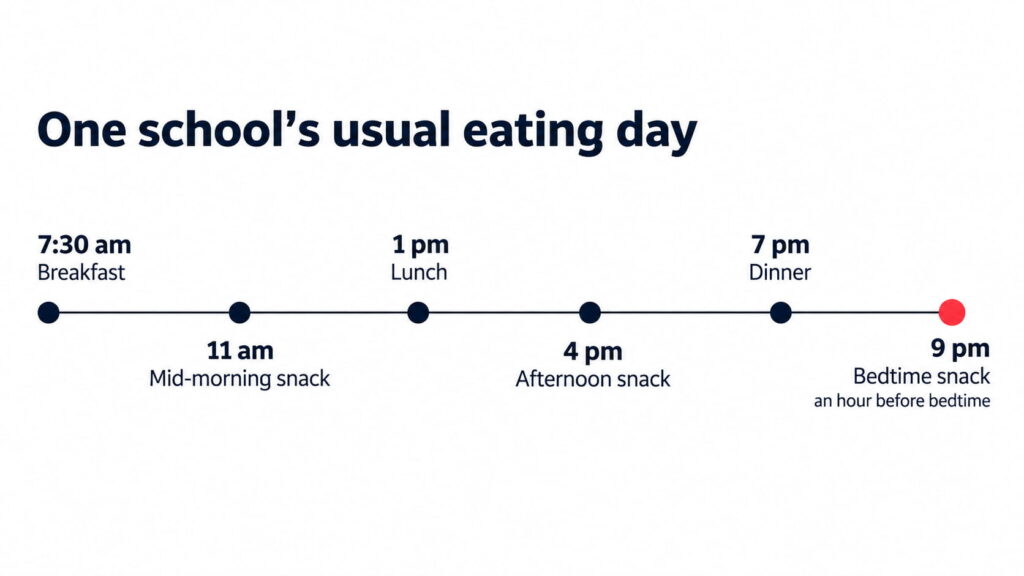
Meal schedules vary between schools. Schloss Krumbach International School in Austria provides six meals and snacks across the day, from breakfast at 7:30 to an evening yoghurt or kefir snack at around 21:00.
Whether boarding school food is healthy can be checked against public guidance. The World Health Organization’s healthy-diet fact sheet (January 2026) says everyone older than 10 should aim for at least 400 g of fruit and vegetables a day.
In the European Union, school kitchens must give allergen information on unpackaged food for 14 allergens, under Regulation (EU) No 1169/2011.
To judge boarding school food from abroad, ask each school for its meal times, who plans its menu and its written allergy procedure.
Key takeaways
- Meal numbers and times vary; ask for both.
- Ask who cooks and who plans the menu.
- A buffet offers choice; a set plan fixes the menu in advance.
- Judge a real week’s menu against public guidance.
- Get the allergy procedure and food-from-home rule in writing.
Jump to: Who cooks · Meal times · Is it healthy? · Allergies and diets · Questions to ask · One school’s answers · FAQ
Who Cooks, and How the Food Is Served
Who cooks decides who answers when a parent asks about an ingredient. Ask whether a school runs its own kitchen or uses an external catering company.
Service models include:
- Buffet: students choose from several dishes.
- Food stations: a buffet split by type (separate counters for hot dishes, salads and pasta).
- Set meal plan: one menu per meal, decided in advance.
- Family-style dining: shared dishes placed on each table.
A buffet suits a teenager who already builds a balanced plate unprompted. A set plan suits one who, left to choose, would eat the same dish every day. A buffet leaves the choice to the child; a set plan leaves it to the school.
How Many Meals, and How Far Apart
Three main meals plus snacks is a common pattern on school dining pages. Each school sets the count and spacing within its boarding routine: the structured daily schedule governing study, meals, recreation, evening activities and residential life.
England’s Department for Education sets a floor in its National Minimum Standards for Boarding Schools, May 2026 edition. Beyond main meals, boarders must have “access to drinking water and to food or the means of hygienically preparing food at reasonable times”. The standards apply only in England. Ask what food is available after dinner — in the evening hours of study and free time before bed.
Is Boarding School Food Healthy?
A menu can be checked from another country, against public reference values rather than adjectives.
| On a real week’s menu, look for | Public reference point | Source |
|---|---|---|
| Fruit and vegetables every day | At least 400 g a day for everyone older than 10 | World Health Organization, healthy diet fact sheet (January 2026) |
| Vegetables and fruit, Austrian guidance | 5 portions a day, ideally 3 of vegetables and 2 of fruit | Austrian dietary recommendations, federal health ministry (January 2026) |
| Dairy or other calcium sources | Calcium: 1,150 mg a day at ages 11–17 (950 mg for adults aged 25 and over) | European Food Safety Authority (EFSA), Dietary Reference Values (2017) |
| Iron sources | Iron: 11 mg a day for boys and 13 mg for girls aged 12–17 | European Food Safety Authority (2017) |
EFSA figures are population reference intakes: enough for virtually all healthy people of that age, not a target for one child.
One reference runs against intuition: EFSA sets calcium higher for 11- to 17-year-olds than for adults. A parent cannot weigh a plate, but a real week’s menu shows whether fruit and vegetables appear at most meals.
Allergies, Special Diets and Religious Needs

Regulation (EU) No 1169/2011 names schools as “mass caterers”, alongside canteens and hospitals: establishments where food is prepared ready for the final consumer.
For unpackaged food, allergen information is mandatory. It covers the 14 allergens in Annex II: cereals containing gluten, crustaceans, eggs, fish, peanuts, soybeans, milk, nuts, celery, mustard, sesame seeds, sulphur dioxide and sulphites, lupin and molluscs.
In Austria, the Allergeninformationsverordnung, BGBl. II Nr. 175/2014, has applied this to unpackaged food since 13 December 2014. The information can be written, or given orally by trained staff when a visible notice says it is available on request. The law requires information, not a person who checks your child’s plate.
Religious and other special diets are a separate question. Ask which diets a kitchen cooks daily, and how it handles fasting periods such as Ramadan.
Questions That Test a School’s Food Claims
School dining pages repeat common phrases that cannot be checked as written. The food-claims test turns seven of them into questions with specific answers.
| The claim | The question that tests it | A specific answer names |
|---|---|---|
| “Home-cooked” | Is the food cooked on site by your own kitchen staff, or bought in from a caterer? | Where the kitchen is and who runs it |
| “Healthy, balanced menus” | Who plans the menu, with what qualification, and may I see one real week’s menu? | A qualified role and a real menu |
| “Plenty of choice” | Is it a buffet or a set plan, and who notices if my child skips meals? | The service model and the adult who watches plates |
| “Regular meals” | What are the meal and snack times, and what is there after dinner? | Clock times, including the last food before bed |
| “We cater for all diets” | How is allergen information given, who checks my child’s plate, and which religious diets do you cook? | A written procedure and the diets by name |
| “Fresh, local produce” | Where does the produce come from? | Named sources |
| “Students can have snacks” | What food from home is allowed, and where is it kept? | A written rule |
One School’s Published Answers: Schloss Krumbach International School
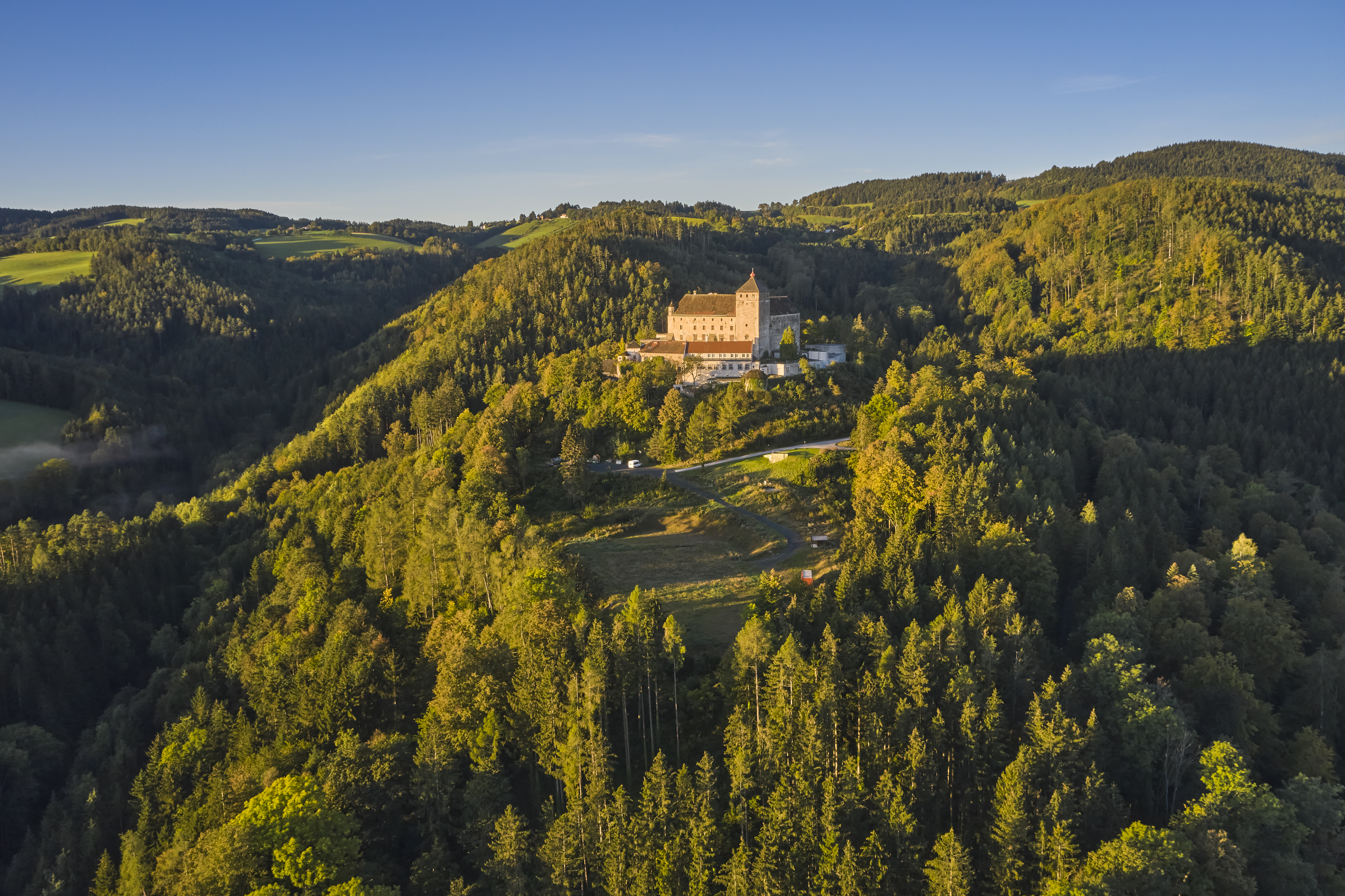
Schloss Krumbach International School in Lower Austria is a full boarding school for students aged 12 to 18. Full boarding is a residential educational model in which students live at school and follow a structured academic and boarding programme.
| Question | The school’s answer |
|---|---|
| Who cooks? | Meals are freshly prepared on campus in the school’s own kitchen by the SKIS culinary team. There is no outside catering. Even bread is freshly baked. School garden also provides fresh seasonal vegetables. |
| Who plans the menu? | SKIS publishes a six meal menu crafted according to nutritional guidance, with protein, vegetables and other foods distributed across the day. |
| Buffet or meal plan? | SKIS does not use a buffet. Students follow a structured meal plan designed to provide varied and balanced meals rather than leaving every food choice entirely to the student. |
| When do students eat? | Six times across the day: breakfast, a mid morning snack, lunch, an afternoon snack, dinner and an evening snack. |
| Allergies and dietary restrictions? | The school provides different food plans for students with dietary restrictions. Families with allergies, medical diets or religious requirements should discuss the individual arrangements with the school before enrolment. |
| Where does the produce come from? | The school has its own garden, cared for by staff and some students, which produces items including pumpkins, tomatoes, cucumbers and peppers. Families who require detailed sourcing information can ask the school. |
| Food from home? | Families should ask the Boarding Team for the current rule, particularly where severe allergies are involved. |
| Are meals extra? | No. Six meals and snacks each day are part of the annual full boarding fee. |
“Ask the school” marks a question the school’s published material does not answer. The boarding contact is boarding@krumbach.school.
| Usual time | Meal | What it usually includes |
|---|---|---|
| 07:30 | Breakfast | Hot breakfast and fresh homemade pastries |
| 10:50 | Mid morning snack | Fruit, vegetables or smoothie |
| 13:00 | Lunch | Soup, hot meal, salad and homemade bread |
| 15:50 | Afternoon snack | Homemade pastries |
| 19:00 | Dinner | Hot meal and salad |
| Around 21:00 | Evening snack | Yoghurt or kefir |
The full detail is in the school’s published meal policy. On the usual timetable, no daytime gap between meals is longer than three and a half hours. We serve six meals a day in the dining hall, and students stretch before breakfast each day. Meals take place on a phone-free campus: students do not use personal phones during school life.
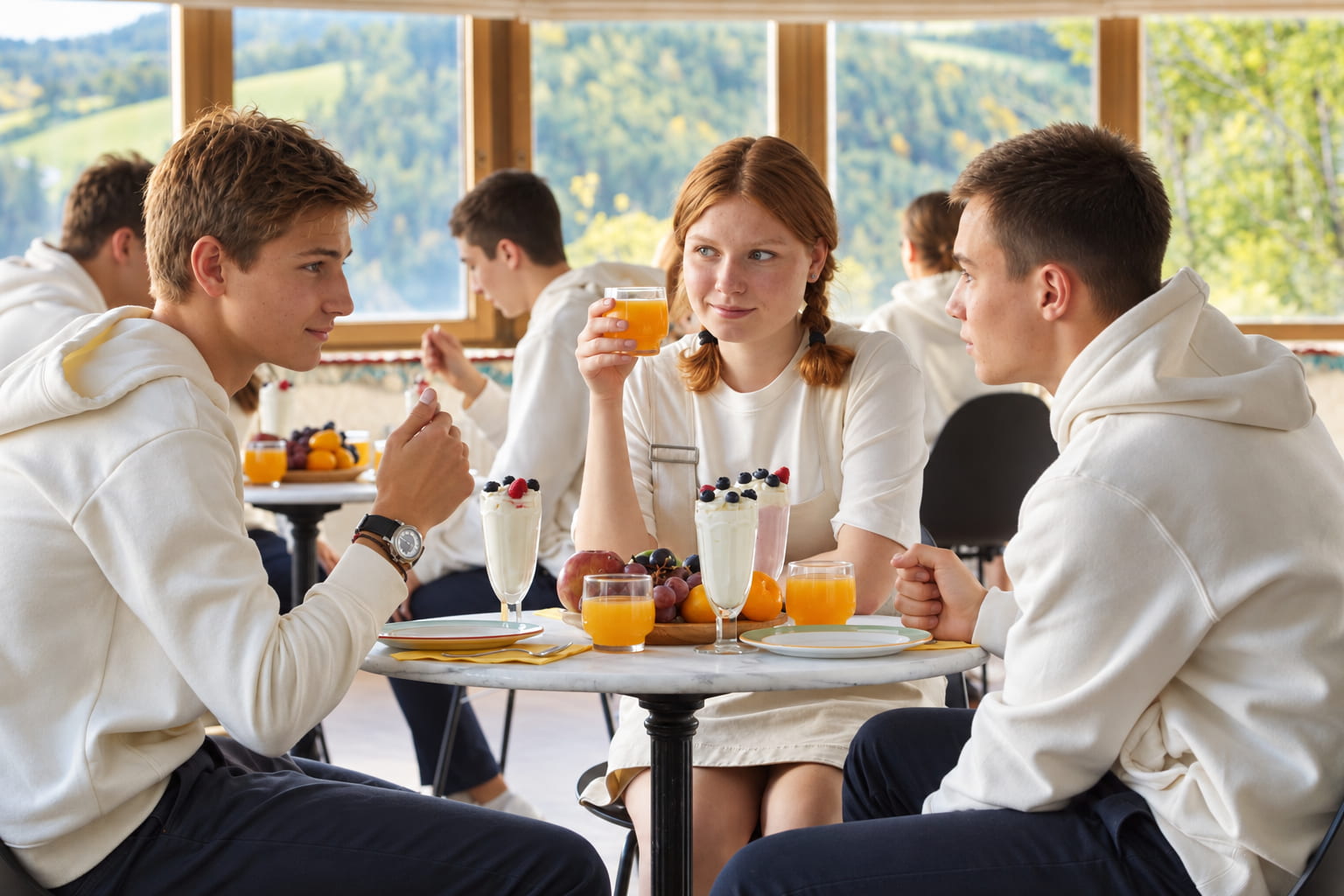
Meals at SKIS form part of the wider boarding rhythm rather than sitting separately from it. Students eat together in the castle dining hall, with meals and snacks spaced throughout the academic day. Morning physical activity takes place before breakfast, and the evening snack comes at the end of the study day before the final boarding routine.
Communal dining is also part of community life. Students and staff come together regularly around meals, giving students predictable points in the day to pause, eat and talk. Like the rest of the campus, mealtimes take place within SKIS’s phone free environment.
SKIS deliberately uses a structured meal plan rather than an unrestricted buffet. The reasoning is practical: teenagers given complete freedom may repeatedly choose the same familiar foods and avoid other parts of a balanced meal. The school’s approach is intended to help students develop healthier eating habits over time.
Parents of a very selective eater should discuss this with the school before enrolment. Ask how much choice is available within each meal, how a refused dish is handled, and how boarding staff respond if a student repeatedly eats very little or avoids particular food groups. The published SKIS material confirms dietary plans for restrictions, but does not set out a general procedure for selective eating, so this should be discussed individually.
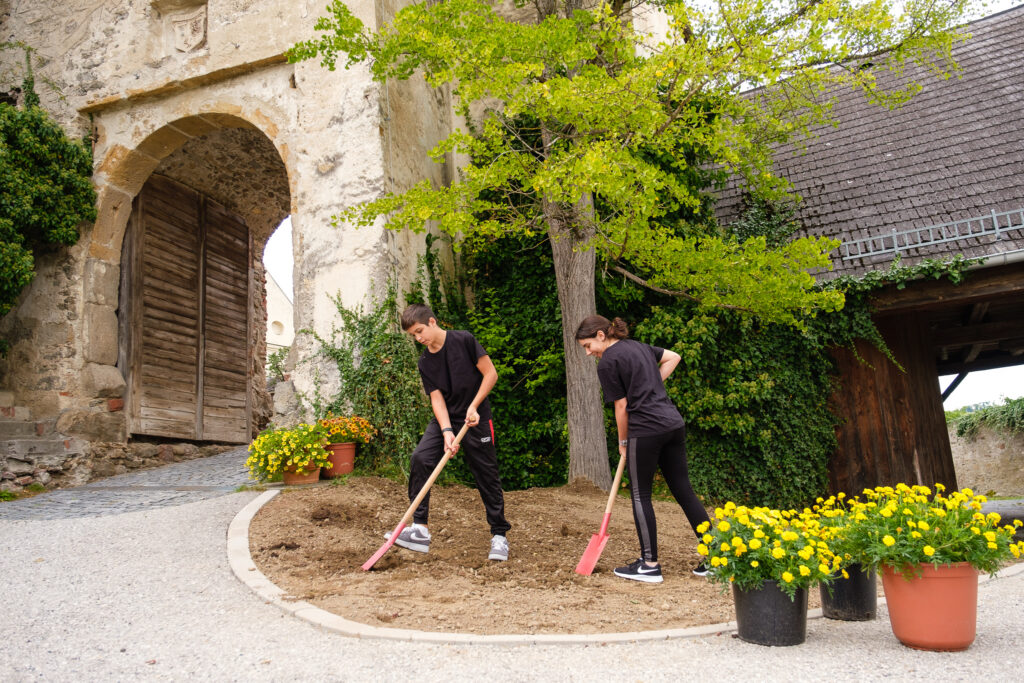
Food also connects with school life beyond the dining hall. Staff and some students tend the school garden, which grows pumpkins, tomatoes, cucumbers and peppers. The kitchen club and gardening workshops run as extracurricular activities.
Meals Are Also Part of Boarding Culture
Food at boarding school is not only a nutrition question. It is also one of the places where community is built.
At SKIS, students eat together in the castle dining hall as part of the daily residential rhythm. On selected weekend evenings, students also organise Fancy Dinners. They prepare the dining area, set the tables, help the kitchen, dress up and later spend the evening in conversation and ball and disco dancing.
This makes food part of something wider: routine on ordinary days, and responsibility, etiquette and community on special ones.
Judging Boarding School Food From Abroad
A parent abroad cannot taste the food, but can read a timetable, a menu and a procedure. So what do boarding school students eat? A trustworthy answer names the meal times, the kitchen and the qualified person who plans the menu.
Our view: a real week’s menu, meal times, the kitchen arrangements and the school’s procedure for dietary needs tell you more than photographs of attractive plates. The caveat: neither shows whether your child eats what is served, so ask who notices when they do not.
Next step: email the seven food-claims questions to every school on your shortlist and ask each for one real week’s menu.
Frequently Asked Questions
How many meals a day do boarding school students get?
Many boarding school dining pages describe three main meals a day plus snacks. Schools choose their own number and times, so ask for them in writing.
Do boarding schools cater for food allergies?
In the European Union, schools count as mass caterers under Regulation (EU) No 1169/2011. At minimum, they must give allergen information for unpackaged food, covering 14 listed allergens. The law covers information only, so also ask who checks a child’s plate.
Can boarding schools provide halal or other religious diets?
Provision differs between schools. England’s National Minimum Standards for Boarding Schools require balanced meals for all boarders “including those with special dietary, medical or religious needs”. Ask each school in writing which diets its kitchen cooks every day and how it handles fasting periods.
Can my child bring snacks or food from home to boarding school?
Each school sets its own rule, so ask for the written version. A clear answer says what food from home is allowed, where it is stored, and whether the rule accounts for boarders with severe allergies.
Where is the food prepared at Schloss Krumbach International School?
All meals are prepared on campus in our own kitchen rather than supplied by an external catering company. Students eat together in the castle dining hall. Regular meal times and communal dining are an important part of the daily boarding routine and help create a stable, family-like rhythm throughout the school day.
Are meals included in the annual fee at Schloss Krumbach International School?
Yes. The 2026/27 annual full boarding fee includes accommodation and six meals and snacks each day. Families are not charged separately for the normal daily meal programme. Individual arrangements outside the standard programme should be discussed with the school where relevant.
What are the Fancy Dinners at Schloss Krumbach International School?
Fancy Dinners are a student-run boarding tradition held on selected weekend evenings. Students help prepare the dining space, use the castle’s historical tableware, assist with the meal and host the adults before an evening of conversation and ballroom dancing, including waltz, tango and quadrille. The tradition brings together responsibility, etiquette, community life and appreciation of the castle setting.
About the Author
Viktoryia Tejada-Correa, Admissions at Schloss Krumbach International School in Krumbach, Lower Austria. Her work covers entry requirements and practical matters for international families.