UCAS
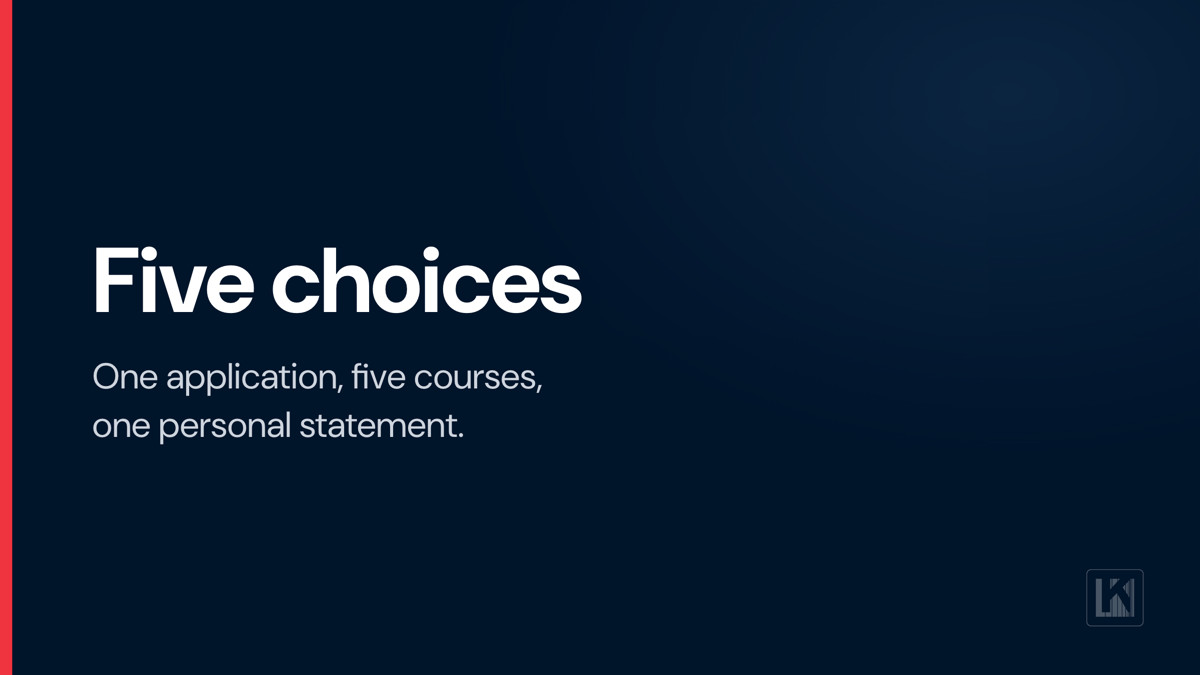
UCAS UCAS, the Universities and Colleges Admissions Service, is the central platform through which virtually all applications to UK universities are made. A student submits one application listing up to five course choices, and every university sees the same grades, predicted grades, personal statement and school reference.
Key facts
| What | Detail |
|---|---|
| Choices | Up to five courses in one application cycle |
| One submission | All five universities receive the same application |
| Contents | Grades, predicted grades, personal statement, school reference |
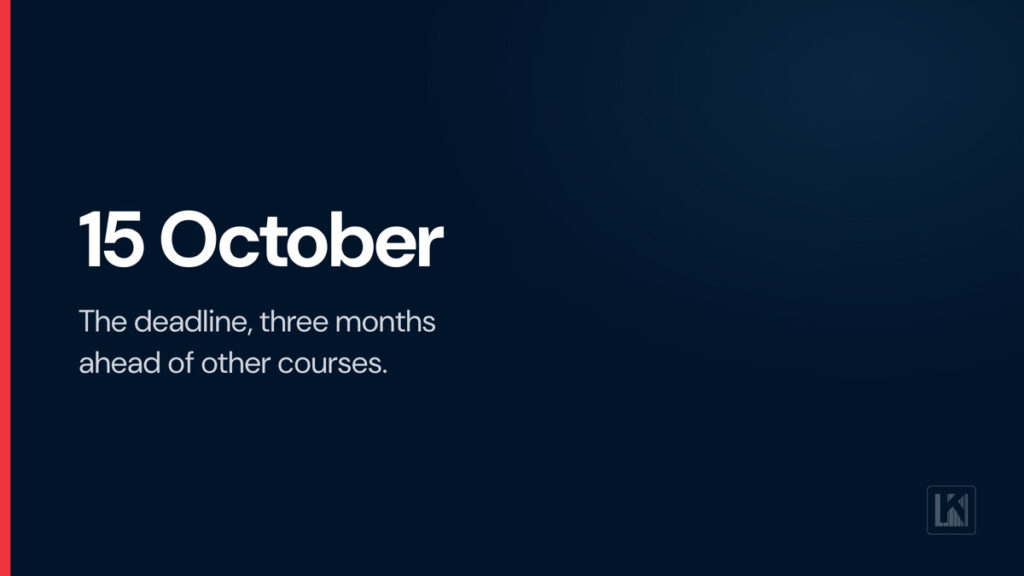
| Early deadline | 15 October for Oxford, Cambridge, medicine, dentistry, veterinary |
| Main deadline | Late January for most other courses |
| Offers | Usually conditional on specified final grades |
| Firm and insurance | A student holds one first choice and one backup |
Five choices, one story
The constraint that surprises families is that the personal statement is not written per university. All five choices read the same text, so five unrelated courses cannot each be addressed convincingly. In practice the five choices need to be close enough that one account of motivation covers them.
Because the application is academic-first, it is also narrower than the US equivalent. UK admissions tutors are deciding whether a student can succeed on one specific course, not whether they would enrich the campus. Grades, predicted grades and subject fit carry most of the weight.
How offers work
Most offers are conditional: a place held open against specified final grades, expressed in IB points or A Level grades. A student accepts one as their firm choice and usually a second, lower offer as insurance.
This makes predicted grades consequential well before examinations. They are set by the school, and they determine which offers appear at all — a point worth raising with a school before the Higher Level subjects are even chosen, since entry requirements are normally expressed at that level.
Current deadlines and requirements are published by UCAS.
At Schloss Krumbach
Students here finish with either the IB Diploma or Cambridge International A Levels, and UK universities state entry requirements in both — IB points for one, grades for the other. Neither route needs translation for a UCAS application.
What varies between schools is the support around the application: predicted grades, the school reference and help with the statement. Those specifics are not published on the school site, so ask Admissions how university guidance is organised in Grades 11 and 12.
Frequently asked questions
Can my child apply to both Oxford and Cambridge?
No. UCAS allows only one of the two in the same cycle, and the application must be in by the October deadline.
Do all five choices see the same personal statement?
Yes. There is one statement for the whole application, which is why the five choices usually need to be in related subjects.
Does the IB Diploma work for UK applications?
Yes. UK universities routinely publish offers in IB points alongside A Level grades, and the Diploma needs no conversion.
Free PDF guide
IGCSE, IB or A Levels: which route fits your child?
The routes from Grade 9 to university side by side: what each qualification involves, how universities read it, and the questions to ask any school.
The PDF opens right after you submit.