How cultural education helps students discover confidence, imagination and their own voice.
Parents always know that their child has an inner world. They see it in small things: an unusual question, a sudden interest in music, a story invented without being asked, a strong reaction to a book, a drawing in the margin of a notebook, a sensitivity to beauty, a thought the child cannot quite explain yet.
But not every child knows how to express that inner world. Some children are shy. Some are afraid of being judged. Some believe creativity belongs only to “talented” people: the child who already sings, dances, paints, acts, writes poetry, or speaks confidently in front of others. Others are creative in quieter ways. They notice. They imagine. They feel deeply. They make connections. But they do not yet know that this is creativity too.
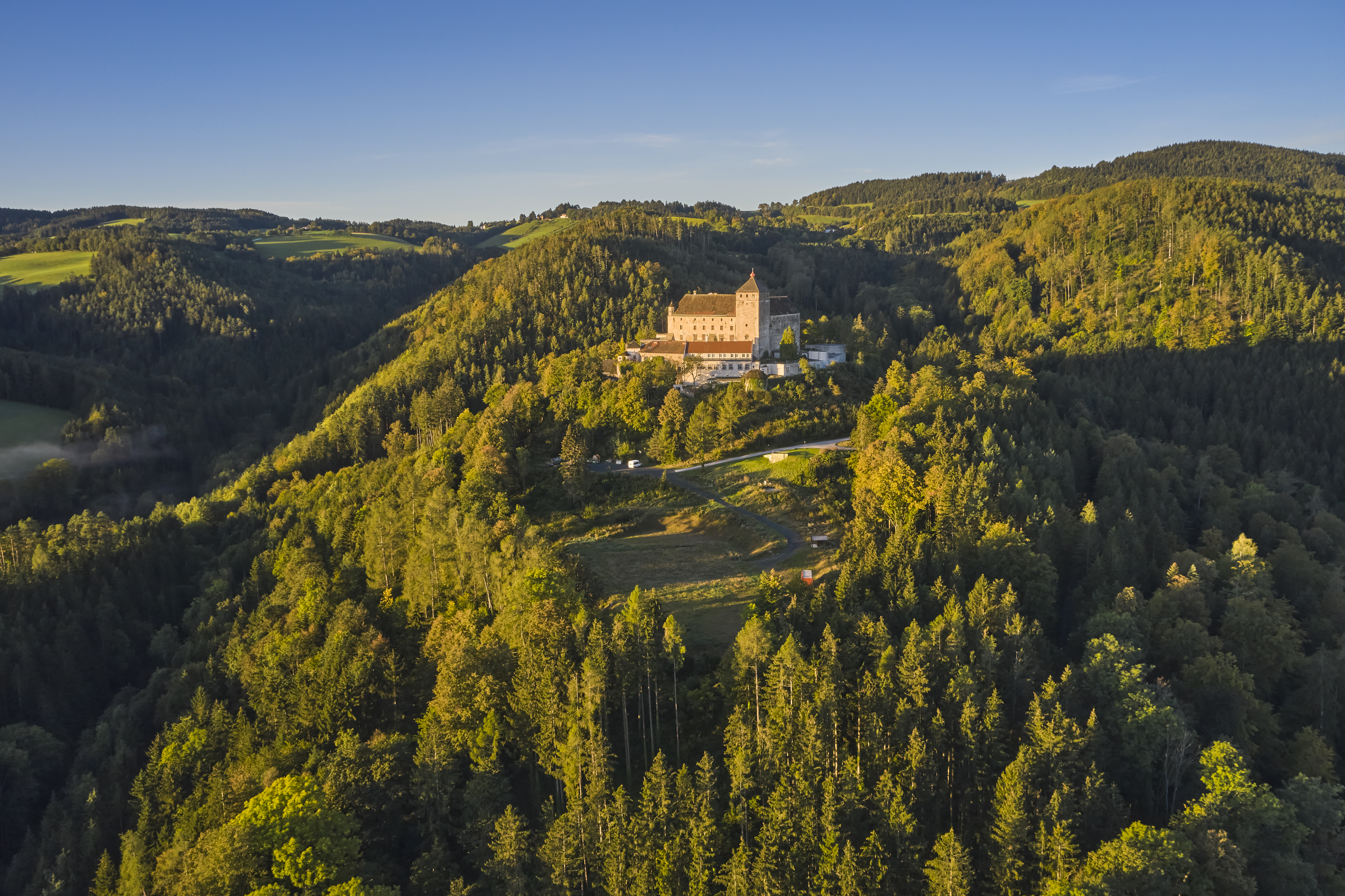
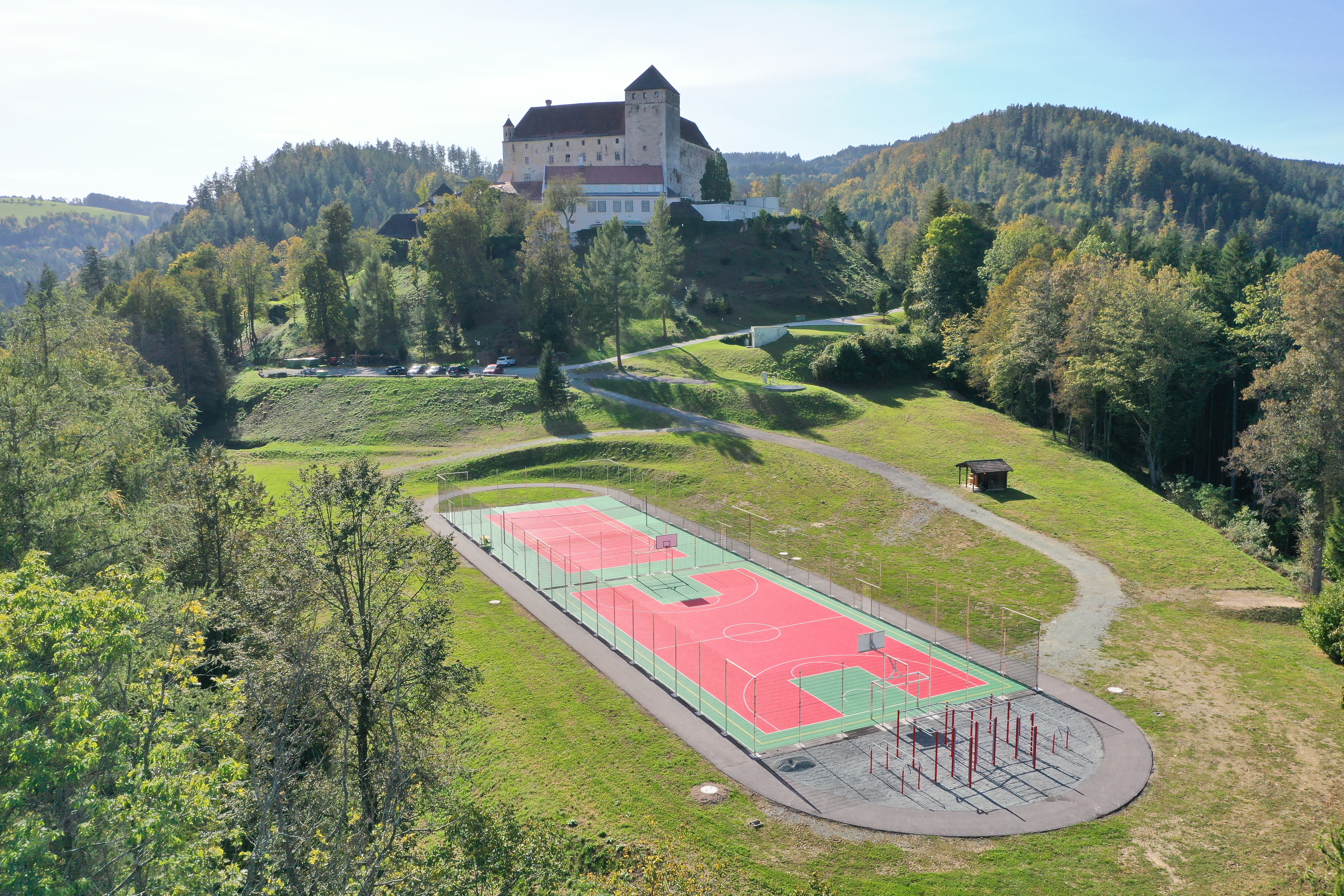
At Schloss Krumbach International School (SKIS), cultural education is one of the ways we help all of our students discover this part of themselves. The goal is not to turn every child into an artist but to help every child become more attentive, expressive, imaginative, confident, culturally aware and alive to beauty.
Creativity does not always begin dramatically. Sometimes it begins with a first line read aloud. A museum presentation. A role in a historical scene. A dance step tried awkwardly and then tried again. A song rehearsed in another language. A student who thought they had nothing to say suddenly realising that perhaps they do. In any of these cases, a good school carries the responsibility to ignite this first spark.

For Ryan, a Grade 9 student at SKIS, culture is not only something taught from a textbook. It is something students discover through people, stories, traditions and shared life.
“Everybody has a story to tell, no matter what culture they come from. Cultural education does not just happen in classrooms; it also happens through socialisation between students.”

This is exactly why cultural education matters in an international boarding school. Students do not only learn about culture. They live among cultures. They hear different languages, different family stories, different songs, different ways of seeing the world. Slowly, they begin to understand that their own voice is part of a much larger human conversation.
Cultural education gives students something to express
Educational thinkers have long connected imagination with experience. A child does not create from emptiness; children transform what they have seen, heard, felt, learned and understood. This does not mean that theory or structured education are unimportant. On the contrary, children need clear teaching, guidance and intellectual foundations in order to make sense of the world. But theory alone is not enough. Cultural education should also give children rich experiences, because these experiences become the inner material they later use to think, speak, imagine and create.
At SKIS, students meet culture through history, literature, art, art history, music, theatre, dance, museums, concerts, performances, cultural trips and school events. These experiences are not decorative additions to school life. At SKIS, cultural education is carefully prepared, taught and embedded into the curriculum. Students do not simply attend a museum, theatre, concert or trip as a separate event; they are guided to understand what they are seeing, connect it to what they are learning, and reflect on it afterwards. In this way, experience and structured education work together. The experience gives students material for thought, imagination and expression, while the teaching helps them give that material meaning, language and form.


Ryan described this difference when comparing cultural education before and after coming to SKIS. He had been exposed to museums before, but not to the same extent. At SKIS, he said, the experience became more direct and more alive.
“Now I am really seeing it firsthand, and it is really a good experience”

That distinction is an important one. At SKIS, we believe children need both: strong structured teaching and direct cultural experience. There is value in learning about culture, but there is also something different about standing in front of it. There is value in learning about music, but also in listening for the character of a culture inside it. There is value in reading about art, but also in presenting a painting in a museum. There is value in studying Austrian culture, but also in learning its dances with your own body. One does not replace the other. The academic preparation gives students knowledge, language and context; the lived experience helps that knowledge become memorable, meaningful and expressive.

This is why culture at SKIS is not treated as a pleasant extra after the “serious” subjects are finished. It is part of the serious work of education. It teaches students to see more deeply, think more freely, speak more courageously and discover what they are capable of expressing.
Music teaches students to hear culture
For many children, classical music first appears simply as sound: beautiful, strange, emotional, difficult, sometimes overwhelming. But when students begin to study the history of music, they discover that music can also become a way of understanding people, nations, values and time.

Ryan described this clearly. Through music lessons, he began to understand how composers can carry the spirit of their culture in their work.
“A way to explore culture is through music. A person’s attitude can be reflected through music”
He spoke about composers such as Wagner, Liszt and Donizetti not only as names to remember, but as figures whose music reveals something about character, national feeling and cultural identity. He noticed how Hungarian pride can be heard in Liszt, how German breadth and force can be felt in Wagner, and how music can hold the atmosphere of a people.


Most importantly, this learning became personal. Ryan explained that he reached the point of attending a concert by himself during the winter holidays because music lessons had opened something in him.
“I came to the point of even going to a concert myself because we explored not just the music in depth, but the culture in it”
This is one of the strongest signs that our education has worked. The student no longer engages with culture only because the school requires it. Curiosity and appreciation have become his own.
This was at Schloss Krumbach, every child is taught to understand, feel, and self-express through music.


Ryan also connects music with the international environment of the school. At SKIS, music is not only something students study; it is something they exchange.
“I have learned to sing in different languages. Now I am not only singing in English or my own language; I am also singing in German and even Russian, which I never knew how to read before. These are cultures I have picked up by meeting different people who taught me, and I have also taught them about my culture.”

This is cultural education in action: a student learning music, language, confidence and cultural exchange at the same time. As Ryan put it very simply,
“This is one of the best schools where you can grow as a musician.”
Museums teach students to see through their own eyes
Museum visits and cultural trips are sometimes misunderstood as pleasant school outings. At SKIS, they are much more than that. They are part of how students learn to see, think and speak about the world around them.
When students visit museums, they do not come as passive visitors. They come prepared. In class, they learn about the artists, historical periods, cultural context and ideas connected to what they will encounter. During the visit, they are often asked to present paintings, speak about artists, connect artworks to wider historical themes, and explain what they notice. This transforms the museum from a place of passive looking into a space of active interpretation.
In this way, the experience is not separate from the curriculum. It is an extension of it. Students first receive knowledge, language and structure; then they meet the culture directly and learn to respond to it with attention, confidence and understanding.


Ryan described this difference with unusual clarity.
“When you only learn from what the teacher explains, it is more like looking through the eyes of the teacher. But when you experience it firsthand - looking at the museum, looking at the paintings, going to these places and feeling the atmosphere - you experience it through your own perspective”
That sentence captures one of the central purposes of cultural education. At our school students are not meant to borrow someone else’s admiration. They are meant to develop their own informed, carefully educated, yet opinionated perception.
This is why art history and museum presentations matter. A child learns to stand before something beautiful, difficult or historically important and ask: What do I see? What do I think? What does this reveal? Why does this matter?

Ryan’s reflections on Rembrandt show this beautifully. He did not speak about Rembrandt only as a famous artist. He had formed a judgement.
“What I enjoyed about Rembrandt is that he does not really fit into any art school. He does not fit into the school of Florence, or Venice, or the Flemish school. He is himself. His style is unique, and that is what makes him wonderful.”
That is not memorisation. That is a student learning to see distinction, originality and artistic identity. He is beginning to understand that greatness is not always about fitting into a category. Sometimes it is about becoming unmistakably oneself.
Culture connects subjects that children see separately
One of the signs of a strong education is that subjects stop feeling isolated. History is no longer only history. Art is no longer only art. Music is no longer only sound. Literature is no longer only text. Students begin to see connections.


Ryan experienced this while preparing his presentation on Rembrandt’s Nativity.
“When I prepared my presentation on Rembrandt’s Nativity, I found out that the ruler who commissioned his works, Frederick Hendrik, lived in the exact period we were studying in history. This creates connections in your mind about how politics influences art, and how art is saved and passed down through history.”
This is precisely the kind of thinking cultural education should develop. A painting becomes connected to patronage, politics, religion, memory and power. A historical period becomes visible not only through wars and rulers, but through the art people commissioned, preserved and passed down.
This is also where creativity begins to deepen. Creativity is not only making something new. It is also seeing relationships that were not obvious before. It is understanding that culture is a web: music, politics, faith, geography, language, architecture, costume, movement, literature and memory all speaking to one another.
At SKIS, cultural education helps students enter that web. It teaches them that knowledge is not flat. It has layers.
Dance lets students enter culture physically
Not every form of cultural education begins with words. Some begin with the body.
At SKIS, dance is part of the cultural education framework because it allows students to experience tradition physically. They do not only learn that Austria has a rich dance culture. They learn the dances. They practise elegance, rhythm, coordination, posture and social grace. They discover that culture can be embodied.

When asked how much he enjoys dancing on a scale from one to ten, Ryan answered immediately: ten. He especially loves the Ländler because of its elegance and beauty.
For him, dance is not only an activity. It is another way of entering a culture.
“Classical dances are also one way of experiencing culture firsthand. We live in Austria, and we have danced many classical dances from this country, which made me dive deep into Austrian culture - not only through class learning, but also through physical learning”
This matters because some children open creatively through movement before they open through speech. A child may not yet know how to express beauty in language, but they can feel it in rhythm, gesture and form.
The fancy dinners at SKIS also become part of this cultural formation.They include elegance, clothing, atmosphere, manners and dance. Students learn how culture can shape behaviour, posture and the way people gather together.

They also learn that cultural education does not mean abandoning one’s own background. Ryan compared Austrian dance traditions with his own culture, where dance is also deeply important. In this way, learning Austrian dances helped him understand Austria more deeply while also seeing his own heritage with new appreciation.
This is what international education should do and what it actually does at Schloss Krumbach. It does not turn cultures into slogans. Rather it helps students recognise the beauty of different traditions, including their own.
Creativity grows through repeated creative work
A child may not notice their own creative growth while it is happening. Growth often feels ordinary from the inside. A poster here, a project there, a class presentation, a group task, a performance, a script, a song, a dance, a museum reflection. But over time, these repeated acts change the student.

Ryan described his own development very powerfully.
“My creative potential really has skyrocketed.”
He did not mean this as a vague compliment. He explained exactly why it happened. Over two years, he had been asked to engage in creative tasks again and again: posters, projects, group work, music, performances, presentations, and creative work even in subjects such as mathematics and biology.
“My creative potential has grown drastically over the past two years. There were many things before coming to SKIS that I never would have thought of doing, or thought were possible, or thought myself capable of doing.”
This line belongs at the heart of the article. It is exactly what we mean when we say every child is creative, but not every child knows it yet. Sometimes a child does not need to be “given” creativity. They need to be placed in an environment where creativity is repeatedly asked of them, supported, challenged and noticed.

Ryan also understood something very important about how creativity grows.
“The more creative tasks you engage in, and the more you reflect on them, the better your ideas become. Your creative potential is slowly growing. You might not notice it, but really it is”
This is a mature insight. Creativity is not only inspiration. It is practice. It grows through doing, reflecting, correcting, improving and trying again. Over time, a student begins to feel: I can do more than I thought.

As Ryan put it elsewhere in the interview.
“The more you challenge yourself, the more you realise that actually, I really can do that”
This is one of the quiet miracles of education at Schloss Krumbach International School: a child discovers not only a skill, but a new image of themselves, and that they are capable of more than they first believed.
A supportive community helps students open up
A child’s voice does not develop in isolation. It develops in an atmosphere. If students fear mockery, they hide. If they feel supported, they try. This is especially true in adolescence. A teenager may have talent, but not yet have the confidence to show it. They may want to sing, but fear being laughed at. They may want to dance, but feel awkward. They may want to speak, but worry about making a mistake.

The community around them determines whether expression feels dangerous or possible.
Ryan connected his creative growth directly to the environment at SKIS. He spoke about learning from other students every day, asking for help, giving help back, and becoming more open because of this exchange.
“When you are in an environment like this, it makes you want to open up more. The more open you are to learning, the more you actually learn. You ask someone for help, they help you, and the next day they may ask you for help. It goes back and forth.”

This is one of the most beautiful parts of an international boarding school when it works well. Students do not only receive culture from adults. They receive it from one another. One student teaches a song. Another explains a word. Another shares a tradition. Another helps with pronunciation. Another brings a different way of seeing history, music, dance or faith.
Ryan summarised this kind of exchange in one simple sentence.
“You learn from some people, people learn from you. That’s how culture works”
This is not only social life. It is education. A child becomes more open, thoughtful and expressive when they are surrounded by others who also have something to give. At Schloss Krumbach International School, this exchange is not left to chance. It is lovingly and carefully nurtured through shared learning, cultural experience, artistic expression and everyday kindness.
In this way, SKIS builds more than academic confidence. It nurtures a community of proudly educated, artistically curious children who learn from one another, support one another and grow with respect for the cultures and people around them.
Cultural education makes academic subjects come alive
One of the strongest arguments for cultural education is that it does not pull students away from academic seriousness. When done well, it makes academic subjects more alive.
Ryan spoke about the historical plays and performances created by older students. What impressed him was not only the performance itself, but the fact that students had become so captivated by history that they wanted to dramatise it, interpret it and share it.


“The students’ historical plays show how much their creativity has grown. They made Napoleon so interesting that now I want to study it. They showed that history really is interesting.”
This is important. A student became more interested in a historical topic because he saw other students bring it to life creatively. Culture did not replace academic study. It awakened the desire for it.
Ryan also recognised the role of teacher passion in this process.
“If the teacher does not put in that much love, then students would not be that interested. But the teacher puts so much effort into it, and they see it, and they are in awe of it”

This is a very SKIS idea. Cultural education is not only about adding activities to the timetable. It depends on teachers who care enough to make knowledge vivid, beautiful and worth entering.
When history becomes a scene, when music becomes a culture, when art becomes a judgment, when dance becomes physical understanding, students stop seeing knowledge as dead information. They begin to experience it as something living.
No screens means more space to think
This question has become more urgent today. In a world where artificial intelligence can produce text, images, summaries and answers almost instantly, why should students still learn culture, art, music, history, theatre and dance? Why should they draw, write, rehearse, perform, think and create for themselves?

Ryan’s answer was direct. If students rely too much on AI, the practical part of creativity begins to diminish. The spark becomes weaker because the student no longer has to think, imagine, struggle, revise or create for themselves.
“When students find out that anything can be done with AI, the practical part starts getting diminished. The creativity, that spark influenced by cultural education, starts to reduce. Your creativity levels are depleted because you do not want to think more. Your thinking skills get jammed because they are not being put into use.”
This connects strongly to the SKIS no-phone and no-AI approach. Students are not expected to outsource their thinking to devices or algorithms. They use notebooks, pens, their own attention, their own memory, their own imagination, their own conversations and their own effort.
Ryan described this simply.
“When there are no screens, there is more space to think for yourself. Without the phone, we have notebooks, proper notebooks, pens, and you start realising: actually, I can do this.”
This is one of the clearest arguments for why a no-phone and no-AI environment matters. It does not only remove distraction. It gives students back the chance to discover their own ability.
Ryan gave several examples. Some students are good at drawing. Some are good at mathematics. Some are good at writing essays. Some are good at telling stories. Some are talented at making posters. But if AI does the work too early, students may never discover that these abilities belong to them.

“Imagine if we had AI. Some students would not understand that they are actually good at writing essays, good at writing stories, talented at making posters, or able to think that well. Maybe with AI the words might be better, but where is the creativity in it?”
This is the heart of the issue. AI may polish the product, but it can steal the discovery. A student may receive better words and lose the experience of finding their own.
For Schloss Krumbach, a school that is wholeheartedly committed to forming independent thinkers, this question bears significant weight.
Finding voice changes how students carry themselves
The phrase “finding your voice” can sound abstract, but in school life it is very concrete.
It is the student who begins to sing in a language they did not know before. The student who presents a painting in a museum. The student who acts in a historical scene. The student who writes a script without AI. The student who realises they are good at drawing, telling stories, making posters, writing essays, dancing, performing, explaining or helping others understand.
At SKIS, cultural education helps students find their voice because it gives them many safe and meaningful ways to express themselves. Voice is not only speaking loudly. It is knowing what you think. It is having the courage to share it. It is choosing words carefully. It is allowing your imagination to become visible. It is discovering that your inner world has a form. It is also being empowered by in-depth structural teaching and subject knowledge to build your creativity upon something meaningful.

Ryan’s experience shows this clearly. He spoke about singing, piano, learning languages through music, performing, visiting museums, presenting paintings, and using a song to express the emotion of a historical role. He did not simply learn a song. He used music to enter a character, a story and a culture.
This is what cultural education can do. It gives students forms through which they can become more than passive learners. They become interpreters. Performers. Storytellers. Listeners. Participants. They learn to bring themselves into knowledge.

The arts have long been understood as forms of thinking, not only as forms of decoration. They help students notice, choose, judge, revise, interpret and work with meaning. This is visible in Ryan’s story – and in the story of every single student at Schloss Krumbach. That is what it means for a child to begin finding a voice of their own.
Where children discover their hidden abilities
Parents naturally look at academic programmes, examinations, university preparation and language pathways. They should. These things matter. But a child’s education is incomplete if it develops only on paper.
Children also need confidence. Imagination. Cultural memory. Emotional intelligence. Taste. Attention. The ability to express an idea clearly. The ability to listen. The ability to stand in front of others and speak with dignity. The ability to participate in culture rather than only consume content.

Cultural education helps form these abilities. It teaches students to see more deeply, think more freely and speak more courageously. It helps them become not only successful students, but fuller human beings.
This is why culture at SKIS is not treated as an extra. It is part of the serious and mandatory work of education. Students study art, music, history, literature, theatre and dance not because these things look attractive in a school brochure, but because they shape the kind of person a child becomes.

At the end of the interview, Ryan was asked what he would say to a parent considering SKIS. His answer was simple:
“Send your child to this school because here your child realises his or her hidden abilities.”
That line captures the whole purpose of cultural education. Every child is creative. Not every child knows it yet. At SKIS, we give students the experiences, teachers, peers, traditions, performances, trips and atmosphere that help them discover what they did not yet know about themselves.

For one student, it may begin with music. For another, with dance. For another, with a museum presentation, a poem, a historical role, a painting, a script, a language, a costume, a performance, or the first moment they dare to speak in front of others.
Creativity is not only about producing something beautiful. It is about discovering that there is something within you worth expressing.
It is how a child begins to find a voice of their own.
To hear Ryan’s full story, watch the complete interview from our student-led series “Did You Know Why We Do the Things We Do?”
In this episode, Ryan shares how cultural education at SKIS helps students discover hidden abilities, build confidence, think independently and find their own creative voice.
Contact our Admissions Team or arrange a school visit to experience the SKIS community firsthand.