Small Class Sizes
Small Class Sizes Small class sizes mean a low number of students taught together — in practice under about fifteen, and in some schools capped at ten. The size matters not in itself but because of what it makes possible: every student speaks in most lessons, written work is returned quickly with comments, and a teacher cannot fail to notice who has stopped understanding.
Key facts
| What | Detail |
|---|---|
| Typical international range | About 12 to 20 students per class |
| At the low end | Caps of around 10, usually in boarding schools |
| What changes | Speaking time per student, feedback speed, individual attention |
| Where it matters most | Languages, mathematics and discussion-led subjects |
| Average vs maximum | Averages are pulled down by small option groups |
| Cost link | Smaller classes mean more teachers per student, and higher fees |
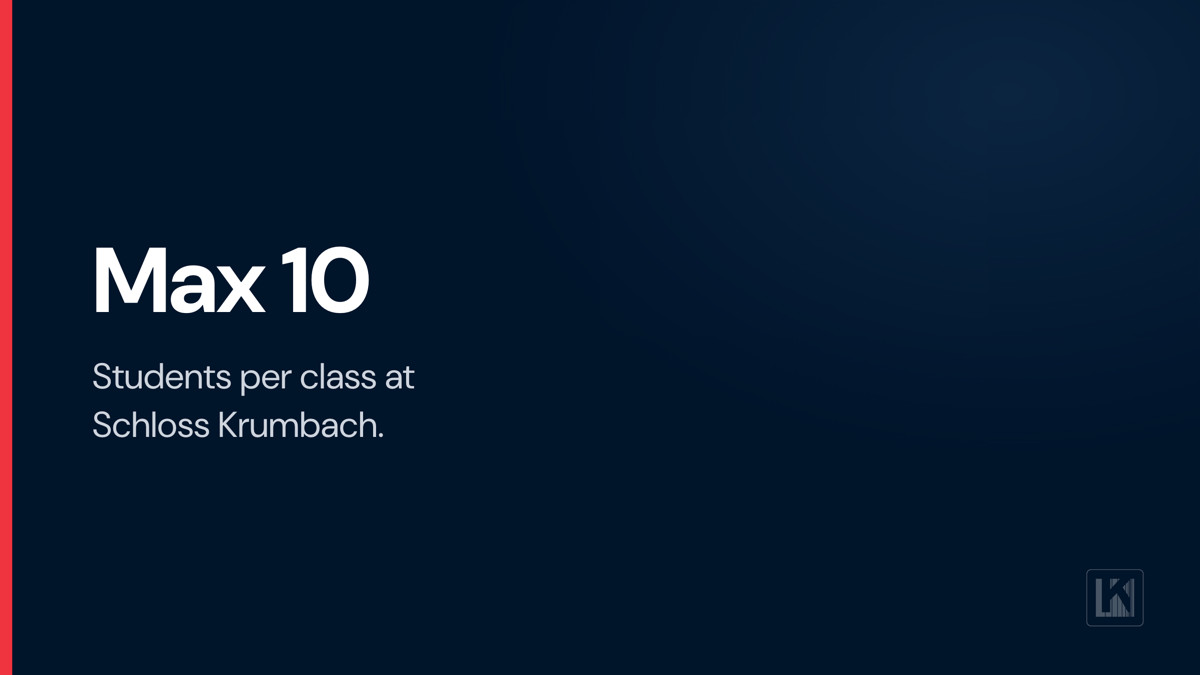
| At Schloss Krumbach | A maximum of 10 students per class |
Why averages mislead
Schools quote average class size, and the average is almost always flattering. A sixth-form option taken by three students and a core class of twenty-four average out at thirteen, and no child experiences thirteen.
Ask instead for the maximum, and ask it about the specific subject and grade your child would join. Then ask what happens when a class fills: whether it is split, capped, or allowed to grow. The answer to the last question tells you whether the number is a policy or a marketing figure.
What the number is supposed to buy
Class size is a means, not an outcome. The things it should produce are observable: that every child speaks in most lessons, that work comes back within days with comments rather than a mark, and that differentiation is real rather than aspirational.
If a school caps classes at ten and still returns essays three weeks later with a grade and no comment, the cap is not being used. The honest test is to ask a current parent how quickly work comes back and how specific the comments are.
In boarding schools the effect extends past lessons, because the adults who teach are often the adults on duty afterwards. See Boarding.
At Schloss Krumbach
Classes at Schloss Krumbach are capped at ten students. The cap is what makes the rest of the model work: differentiated teaching, the school’s own progress tracking with regular reports to parents, and supervised homework where teachers are on duty in the classrooms after lessons and answer questions directly.
It also shapes decisions taken on a child’s behalf — which IGCSE tier to enter, which Diploma route to choose in Grade 10 — because those are judgements about a named student rather than a cohort. See Academics.
Frequently asked questions
Is a smaller class always better?
Up to a point. Below roughly six, discussion-led subjects can lose the range of views that makes them work. The gains are largest moving from twenty-five to ten, and much smaller after that.
What should I ask about class size?
Ask for the maximum rather than the average, for the specific grade and subject, and what the school does when a class reaches the cap.
How large are classes at Schloss Krumbach?
A maximum of ten students.
Free PDF guide
IGCSE, IB or A Levels: which route fits your child?
The routes from Grade 9 to university side by side: what each qualification involves, how universities read it, and the questions to ask any school.
The PDF opens right after you submit.