Core and Extended Papers
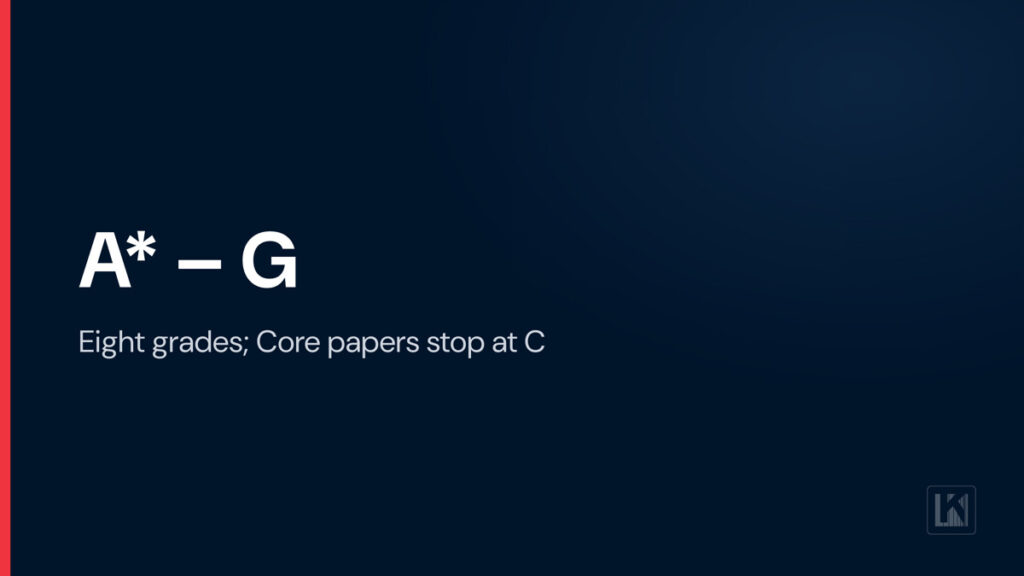
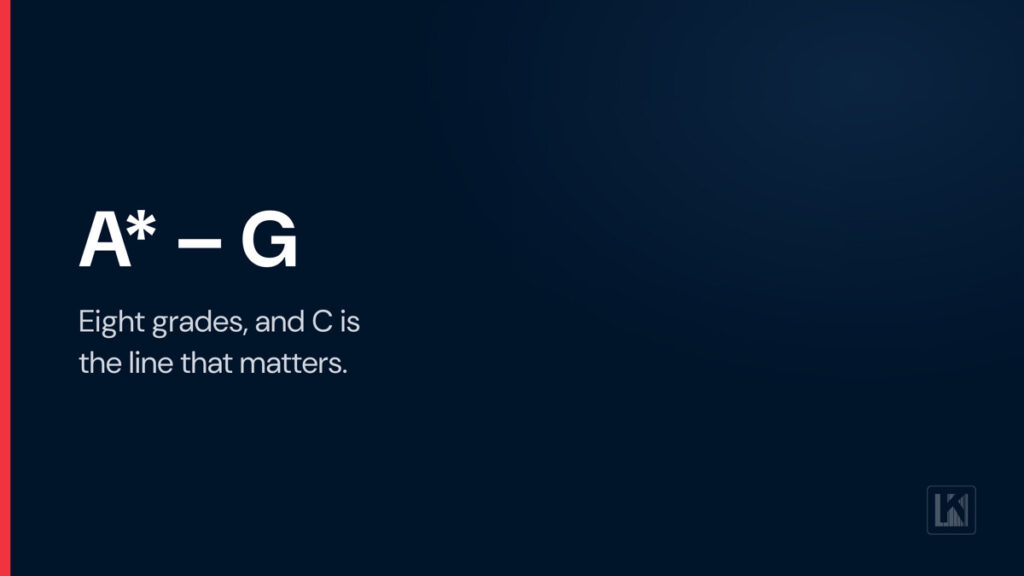
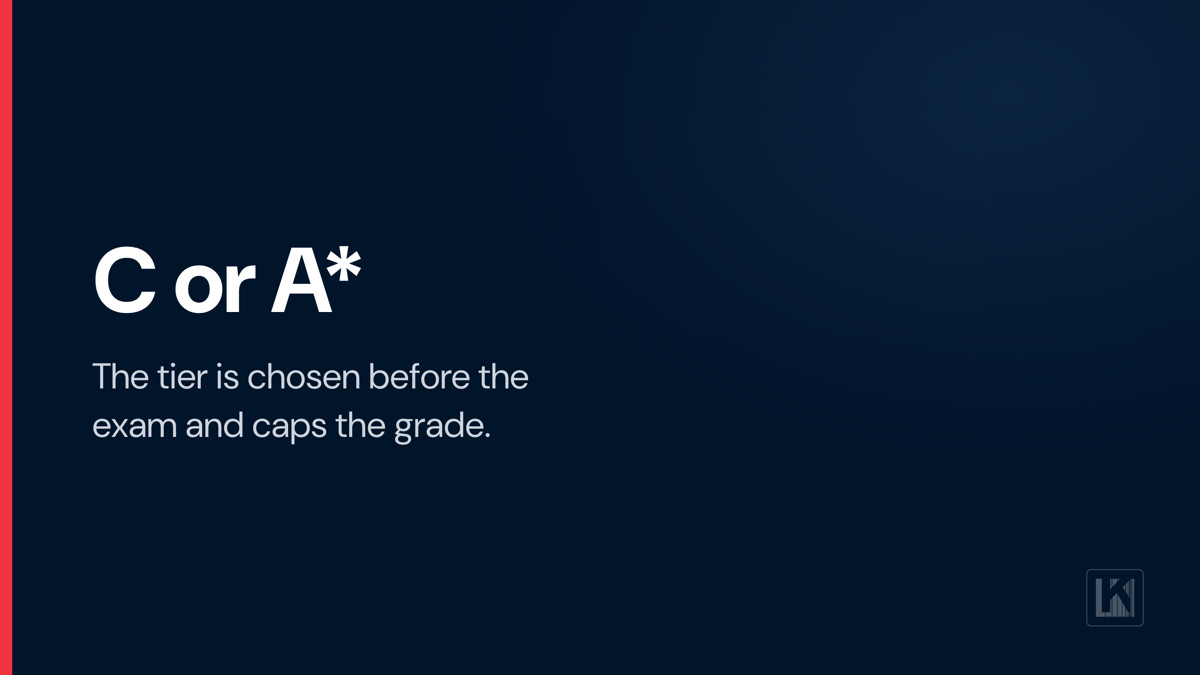
Core and Extended Papers Many Cambridge IGCSE subjects are offered at two tiers of entry. Core papers cover grades C to G; Extended papers cover the full A* to E range. The tier is chosen by the school before entry and sets a ceiling on the grade a student can be awarded, however well they perform on the day.
Key facts
| What | Detail |
|---|---|
| Core range | Grades C to G — C is the best possible outcome |
| Extended range | Grades A* to E — the full range of strong grades |
| Who decides | The school, at the point of examination entry |
| When | Typically during the first of the two IGCSE years |
| Where it applies | Common in mathematics, the sciences and languages |
| Overlap | Grades C, D and E can be reached from either tier |
| On the certificate | The tier is recorded, so a reader can see which was taken |
A ceiling, not a difficulty setting
Tiering is often explained as “harder and easier papers”, which understates it. Entering a student for Core does not merely make the questions more approachable — it removes A*, A and B from the range of possible outcomes before the examination is sat.
The trade-off is real in both directions. Extended papers put weaker candidates at risk of a very low grade or none; Core gives a safer floor at the cost of the ceiling. The judgement is about where a student will be in twelve months, not where they are the day the decision is made.
Questions worth asking a school
Ask when tier decisions are taken, who takes them and whether families are told. Ask how often a decision has been revised after it was first made. A school that treats tiering as an administrative deadline rather than a judgement will produce avoidable C ceilings in subjects a child needed for the next stage.
Ask too what happens afterwards. A Core entry in mathematics can quietly rule out Higher Level mathematics in the IB Diploma or the A Level equivalent, and that conversation is far better held before entry than after results.
Tier availability per subject is published by Cambridge International.
At Schloss Krumbach
With a maximum of ten students in a class, tiering here is a judgement made about a named child by the teacher who sees them daily, rather than a batch decision taken from a spreadsheet of predicted grades.
It also sits inside a longer plan. Students choose between the IB Diploma and Cambridge A Levels in Grade 10, so a tier decision taken during IGCSE is weighed against what each route would require afterwards. See Academics and Admissions.
Frequently asked questions
Can my child move from Core to Extended?
Usually yes, up to the entry deadline — the decision is made by the school during the course, not fixed at the start. After entries close it cannot be changed.
Does the certificate show which tier was taken?
Yes. A reader can see whether a grade came from Core or Extended, which is why a C from Extended and a C from Core are not read identically.
Do all IGCSE subjects have tiers?
No. Tiering is common in mathematics, the sciences and some languages, while other subjects have a single set of papers covering the full grade range.
Free PDF guide
IGCSE, IB or A Levels: which route fits your child?
The routes from Grade 9 to university side by side: what each qualification involves, how universities read it, and the questions to ask any school.
The PDF opens right after you submit.